Introduction
October ended with rainstorms and cooler weather, but overall it was a decent month for stargazing. I took out both of my telescopes one night to enjoy the wonders above. Both scopes performed beautifully after I collimated and aligned them. The nearly First Quarter Moon and Saturn were the clear highlights of the evening. Other notable objects were the Ring Nebula, Hercules Globular Cluster, Double Cluster in Perseus, the Owl Cluster, a few meteors, and the double star Albireo. Jupiter, Mars, and the Orion Nebula were also possible targets, but we decided to call it a night before they climbed high enough to see. If the weather cooperates, I may try to view these objects, and more, during the winter months.
November will likely bring many more cloud-covered skies and snow to Utah, but observers should not let this discourage them from viewing the winter night sky on cloud-free nights. During November, I am looking forward to a planetary conjunction between Jupiter and Mars, Orion rising earlier, and the Leonid Meteor Shower.
 |
| Mercury |
Mercury reaches inferior conjunction with the Sun on the 4th and will return to the morning sky shortly after. The best time to view this world will come around the 20th when it reaches its greatest western elongation. On this date, brilliant Venus can be found approximately 15° to the upper right with Spica nearby. Mercury will brighten in the morning sky as the month progresses, but if an observer can only set aside one morning to view this tiny world, I would choose the 20th, when it is farthest from the Sun. Venus can be used as a guide to find Mercury.
 |
| Venus |
Venus recently transitioned from being the Evening Star to becoming the Morning Star. The first few days of November may make Venus difficult to locate in the morning sky, as it lies close to the Sun and will quickly be overwhelmed by the Sun's morning glow. By midmonth, however, Venus has pulled away from the Sun and will be much easier to spot. On the 7th, the Moon will join Venus in the early morning sky, creating a pleasing trio with Venus, the Moon, and Spica. If an observer can spare only one morning to view Venus, I would choose either the 7th, when the Moon and Spica are nearby, or the 20th, when Mercury is close by.
 |
| Mars |
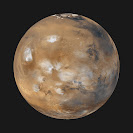
Mars will rise above the Rocky Mountains around 1:30 in the morning for Utahns, near the start of November. By the end of the month, Mars will rise approximately two hours earlier at 11:30. The Earth's Moon will be close to Mars on the 2nd and again on the 30th. During the first half of November, Mars and Jupiter draw closer together. By the 14th, this pair of planets is just 1.5° apart. As we move through November, this pair pulls away from one another, leaving the bright star Regulus between them. Mars will not offer much planetary detail through a telescope since it's so far from Earth in its current position around the Sun. Jupiter should be a target for a telescope this month. If I were to view Mars only once during November, it would definitely be on or near the 15th, during the conjunction of Jupiter and Mars.
 |
| Jupiter |
Saturn reached opposition on October 4, making the Ringed World a popular target for observers of all types. This will continue through November as Saturn will be visible right after sunset. The best views of Saturn obviously come through a telescope, which can reveal its ring system. The Moon will pass close to Saturn on the 20th. If I were to pick only one night to view Saturn this month, it would be the first part of November, when the Moon is not close to Saturn, so I can easily see the ring system through a telescope.
 |
| Neptune |
 |
| Uranus |
Uranus can be found nestled between Aldebaran and the Pleiades throughout November, making it easier to find with a pair of binoculars or a telescope. This world will reach opposition on the 25th, rising in the east as the Sun sets in the west, and then setting in the west as the Sun rises in the east. The Full Moon will pass close to Uranus on the 24th. If I were to view Uranus for only one night in November, I would pick the night of its opposition, the 25th, or the following night, the 26th, before the Moon rises.
Neptune will be the hardest planet to spot because of its great distance from Earth. A telescope or a pair of binoculars will be required to view this most distant world. Neptune will be approximately 7° west of Saturn throughout the month. The Earth's Moon will pass close by on the 20th. With Neptune and Saturn relatively close in the night sky, I would view Neptune during the same night that I was looking at Saturn through my telescope.
Leonid Meteor Shower
The Leonid Meteor Shower will peak on the 17th this month in conjunction with the First Quarter Moon phase. On a moon-free peak date, observers can expect about 15 meteors per hour. Because of the Moon phase, an observer will be lucky to spot half that many on the 17th. This shouldn't deter serious observers, since these meteors are known to leave long, glowing trails. As the name suggests, the Leonid Meteors appear to radiate from Leo the Lion, the constellation where Jupiter can currently be found. Even though the Moon may be an issue, I would still watch this shower during its peak for the best chance to see the long, glowing trails of these meteors.
Monthly Breakdown
November 01: Last Quarter Moon🌗
November 02: Moon passes within 1° of Mars
November 02: Moon passes within 0.5° of JupiterNovember 04: Mercury in inferior conjunction
November 07: Moon passes within 1.5° of Venus
November 09: New Moon 🌑
November 14: Mars and Jupiter Conjunction
November 17: First Quarter Moon 🌓
November 17: Leonid Meteor Shower peaks
November 20: Moon passes within 5° of Neptune
November 20: Moon passes within 7° of Saturn
November 20: Mercury reaches greatest western elongation
November 24: Full Moon 🌕
November 24: Moon passes within 5° of Uranus
November 25: Uranus reaches opposition November 30: Moon passes within 1.5° of Jupiter
November 30: Moon passes within 3° of Mars
 |
| Now get outside and look up! |
Planet images were taken by NASA.
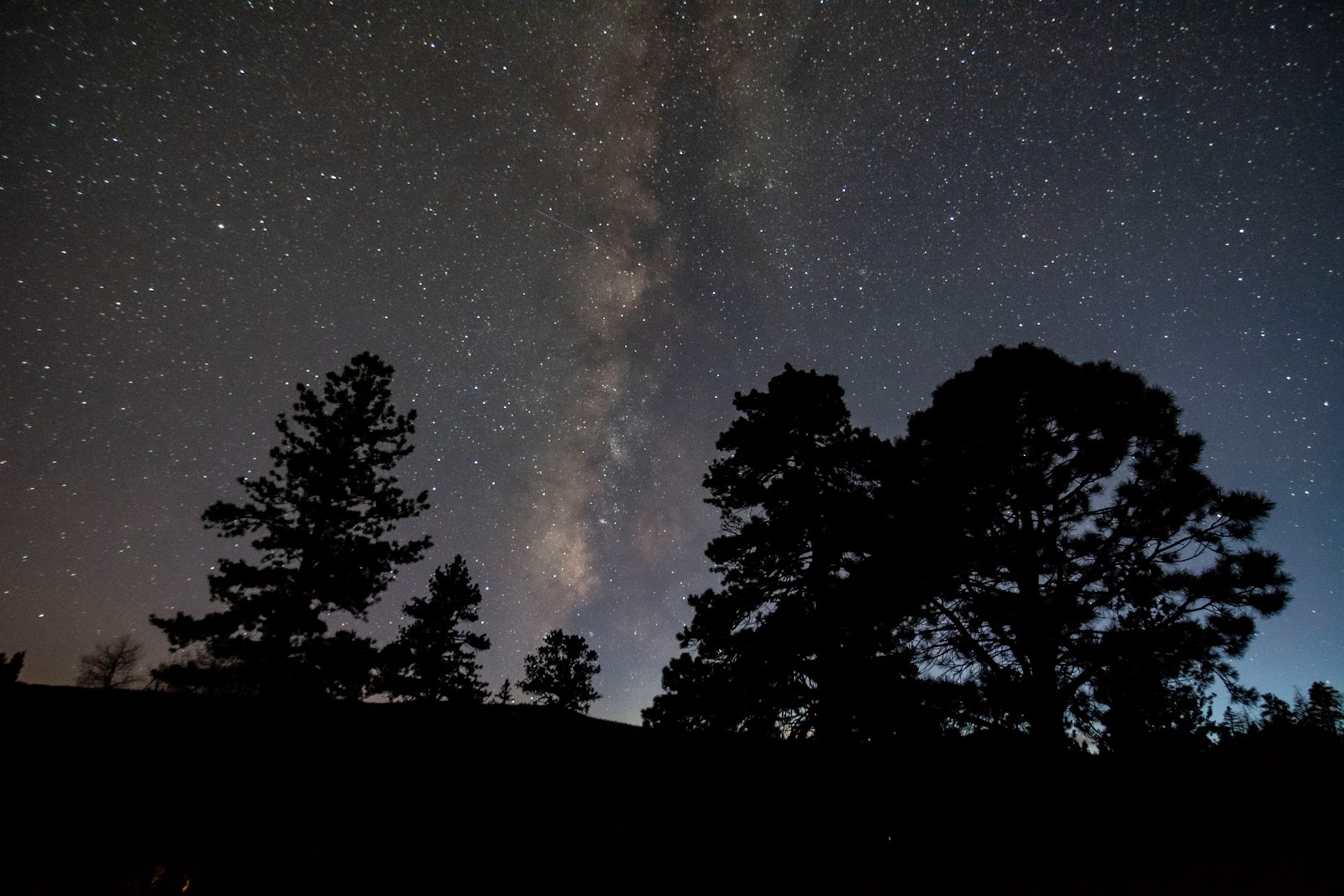
Andrew vs. the Cosmos image was taken by Jeff Greenland.The Milky Way and Trees image was taken by Andrew Greenland.
Orion, Taurus, and Pleiades image was taken by Andrew Greenland.




No comments:
Post a Comment