Introduction
January was a great month for viewing Jupiter, Saturn, and the winter constellations. The sky was mostly clear all month, but temperatures finally plummeted in Utah. The lack of storms allowed the Salt Lake Valley to fill with Utah's notorious inversion, where pollution from refineries and vehicles is trapped. The inversion limits visibility and prevents much planetary or DSO detail from coming through. The Sun was very active throughout January, giving Utahns a couple of chances to see the Northern Lights. Unfortunately, I was not one of the lucky ones to spot this nightly glow.
February will be another great month for viewing Jupiter, Saturn, and the winter constellations if the sky remains clear. Mercury and Venus will finally return to the darkened sky this month. If the Sun remains as active as it has been recently, there may be a chance for Utahns to catch the Northern Lights again. February doesn't bring a major meteor shower, but the Zodiacal Light will be visible on clear, Moon-free nights. All but one planet can be seen shortly after the Sun sets, with the 19th or later being the best opportunity. A comet may also be visible later in the month.
Artemis II has been moved to the launch pad and is expected to launch soon. This mission will send four astronauts around the Moon and return them safely to Earth. Artemis II is expected to launch before the end of March, but no earlier than February 8th. Stay up-to-date with the Artemis Mission and watch the launch live!
 |
| Mercury |
Mercury will be visible in the western sky shortly after sunset during February. The views improve as the month wears on, with the evenings surrounding the 19th being the best of the month. This tiny world will reach its greatest eastern elongation on this day, placing it approximately 20° above the horizon. A nearly New Moon will join Mercury on the 18th, with some lucky observers being able to watch the Moon occult Mercury. Unfortunately, that will not happen for Utahns.
 |
| Venus |
Venus will make its presence known during February. The Earth's evil twin sister will be found above the western horizon after sunset, with the best opportunities coming during the final 10 days of the month. A nearly New Moon will pass close by Venus on the 18th. If an observer is saving one day to view Mercury and Venus, the final day of February will find this pair of inner planets at approximately the same elevation above the horizon after sunset.
 |
| Mars |
Mars is the only planet that observers will not be able to see this month. The Red Planet will return to our dark skies this spring.
 |
| Jupiter |
 |
| Saturn |
Observers should target Saturn through a telescope in early February. It can be found in Pisces all month, standing approximately 30° above the western horizon after sunset on the first evening of February. Saturn is quickly approaching the Sun, limiting the amount of time and its altitude before the Sun's glare overtakes it. Neptune can be found just above Saturn on the 1st, but it will move to the same altitude as Saturn on the 24th. The best chance to view this pair of planets comes on the 15th when they are less than 1° apart, both planets fitting in a single field of view when using a low-power eyepiece in a telescope. As mentioned in previous posts, Moons of Jupiter and Saturn, Gas Giants, Stellarium Plus, and SkySafari Pro are great tools for identifying Moon transits, among other things, in the night sky. The Earth's own moon will pass close to Saturn on the 19th.
 |
| Neptune |
 |
| Uranus |
Uranus will float next to the Pleiades in Taurus all month. A pair of binoculars or a telescope will reveal its greenish glow. The Earth's Moon will pass close by on the 23rd.
Neptune can be found hovering near Saturn all month. Its position will change from being above the Ringed Planet to moving to its right before it falls below Saturn. The best time to view Neptune this month will be during the first two weeks. After this time, Neptune's dim glow may be lost in the glare of the sunset. The Earth's Moon will pass close by on the 19th.
Northern and Zodiacal Lights and a Comet
The Sun was very active during January, and this trend may continue through February and beyond. An active Sun increases the chance of seeing the Northern Lights, even for those farther south, like Utahns! January offered a couple of such chances to see the Northern Lights around midmonth. Unfortunately, I missed them, but I know others saw them! I recommend paying attention to your favorite news source to stay up to date on opportunities to see the Northern Lights.
The Earth is at a point in its orbit around the Sun for its inhabitants in the Northern Hemisphere to see the faint glow of the Zodiacal Light. The best time to see this light will come after February 6th, when the bright Moon will be out of the evening sky. Interested observers should travel to a dark sky location and look west after sunset. After the Sun's glow fades, a cone of light will become visible, often shining about as bright as the Milky Way Band if the sky is truly dark. A long exposure photograph will help bring out the Zodiacal Light.
February also brings the chance to spot a comet! Comet Wierzchos, discovered in March of 2024, will be visible for Northern Hemisphere observers during February. Comet Wierzchos won't be visible for Utahns until about mid-February, when it can be found above the southwest horizon on the 15th. As the month continues, Comet Wierzchos will gain altitude while also dimming in brightness. A pair of binoculars or a telescope will be required to see this comet. A dark sky site will also help in revealing its tail and color. On the 2nd, Saturn and Comet Wierzchos will be about the same altitude above the horizon at 7:30 Utah time, with the comet being further south (to the left) of Saturn.
 |
Monthly Breakdown
February 01: Full Moon 🌕February 09: Last Quarter Moon🌗February 15: Saturn and Neptune within 1°February 17: New Moon 🌑
February 18: Moon passes within 2° of VenusFebruary 18: Moon passes within 0.1° of MercuryFebruary 19: Mercury reaches greatest eastern elongationFebruary 19: Moon passes within 4° of NeptuneFebruary 19: Moon passes within 5° of SaturnFebruary 23: Moon passes within 6° of UranusFebruary 24: First Quarter Moon 🌓
February 26: Mercury and Venus within 5°February 27: Moon passes within 4° of Jupiter
 |
| Now get outside and look up! |
Planet images were taken by NASA.
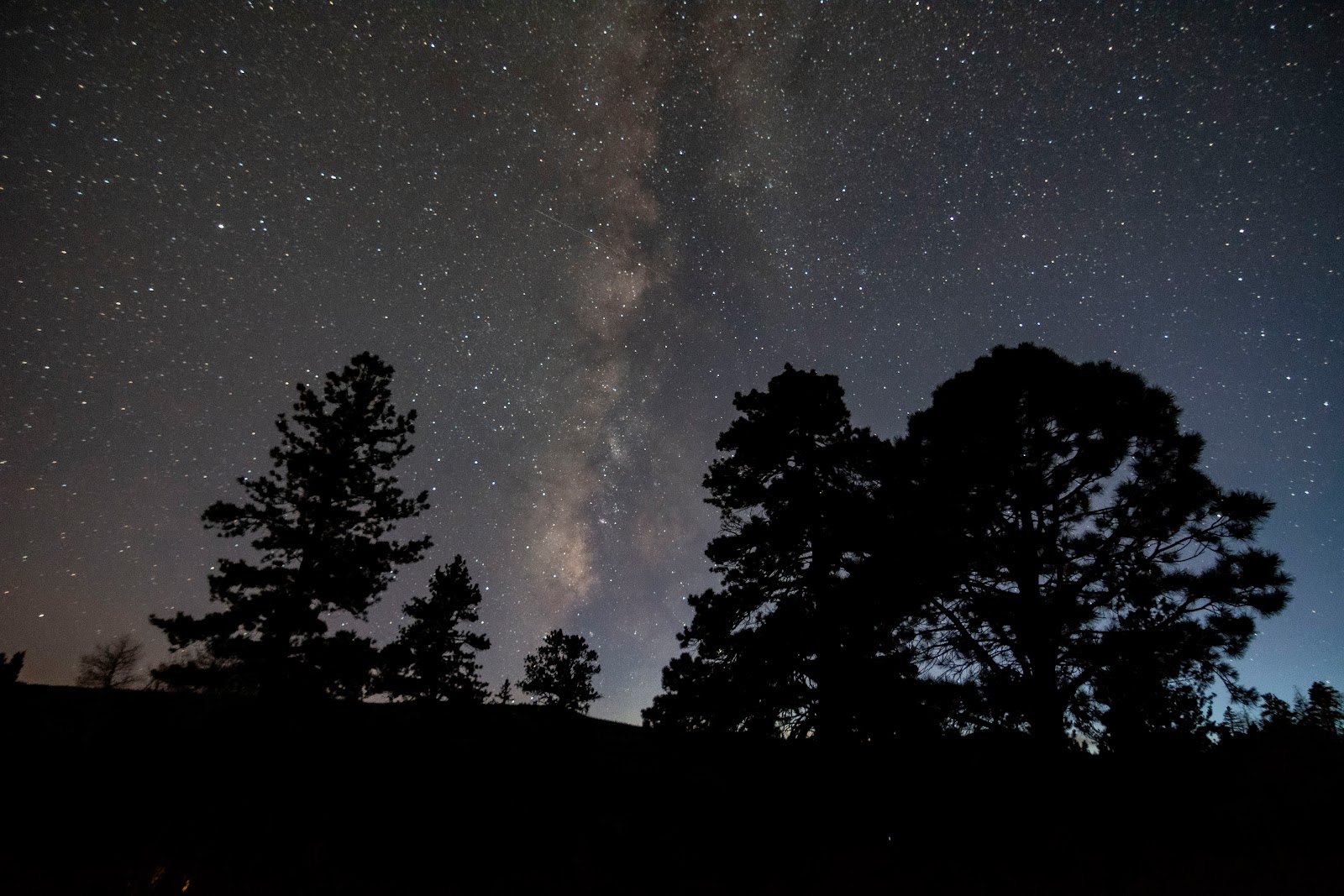
Andrew vs. the Cosmos image was taken by Jeff Greenland.The Milky Way and Trees image was taken by Andrew Greenland.
Orion, Taurus, and Pleiades image was taken by Andrew Greenland.

No comments:
Post a Comment