Introduction
December 2025 remained warm, with record high temperatures tied or set throughout the month. I witnessed several spectacular sunrises and sunsets, Starlink flying high overhead, and, of course, the bright planets and constellations. We also finally received some snow, mostly at higher elevations.
The highlights of January are sparse, but still notable for interested observers. The Winter Constellations, like Orion, Taurus, and Gemini, will continue to float overhead. The Quadrantid Meteor Shower will peak this month. Saturn will be visible with its mesmerizing rings, and Jupiter will reach opposition, shining brightly throughout the month. The first Super Moon of 2026 will occur during the Full Moon phase this month. Unfortunately, the inner rocky planets will be difficult, if even possible, to spot during January.
 |
| Mercury |
The observing window for Mercury is short during January. The best chance to catch the innermost planet will come during the first morning of the year before sunrise. Mercury will rise about 30 minutes before the Sun and shine at -0.5 magnitude. This tiny world will be less than 5° above the horizon before the Sun's glow overpowers it. An observer will need to have a clear view of the eastern horizon before sunrise for a chance to see Mercury. As the month continues, Mercury will move closer to the Sun until its conjunction on the 21st. This planet will return to the evening sky in February.
 |
| Venus |
Last month, Venus was lost from view as it approached the Sun from our vantage point. This month will also be a Venus-free month as this world reaches conjunction on the 6th and hugs the Sun. If an observer can get to a high elevation and have a clear view of the western horizon, there is a slim chance of spotting this planet after sunset and before it dips below the horizon on the final evening of January. Venus will make its presence known in February.
 |
| Mars |
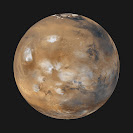
Mars reaches conjunction with the Sun on the 9th and will not return to our skies until spring.
 |
| Jupiter |
Observers should view Saturn as they wait for Jupiter to climb high in the sky. The rings are still nearly edge-on but are still visible through a small telescope. If using a low-power eyepiece, an observer can also see Neptune in the same field of view. The pair will move closer together as the month marches on. These two planets will start the month with 3.5° of separation but will close the gap to less than 2° by the month's end. As mentioned in previous posts, Moons of Jupiter and Saturn, Gas Giants, Stellarium Plus, and SkySafari Pro are great tools for identifying Moon transits, among other things, in the night sky. The Earth's own moon will pass close to Saturn on the 23rd.
 |
| Neptune |
 |
| Uranus |
January 2026 will be the best time to view Uranus until the end of the year. This ice giant will be high above the horizon after sunset and can be found just below the Pleiades, an easy-to-spot object in the night sky. While using a pair of binoculars or a telescope to view the Seven Sisters, let the optical aid drop slightly to find this planet. It will appear as a greenish disk against the background stars of Taurus. The Earth's Moon will pass close by on the 27th.
Neptune will be easy to spot by targeting Saturn with binoculars or a telescope this month. This distant world will share a field of view with the ringed planet. The pair will start the month off being just 3.5° apart but will move closer together, ending the month at just 1.5° of separation. The Earth's Moon will pass close by on the 23rd.
Quadrantid Meteor Shower
The Quadrantid Meteor Shower will peak on the 3rd of this month. Typically, this shower is spectacular and is known for producing fireballs. Unfortunately, this year the Quadrantids peak under a Full Moon, reducing the maximum rate from 80 to about 12 meteors per hour. This is a bad start for meteor watchers of 2026! However, observers should not be entirely discouraged, as the fireballs that are often visible during this shower will still be visible during the Full Moon. Interested observers should look towards Boötes as soon as it rises above the horizon on the 3rd. For Utahns, this will occur between 1:30 and 2:00 AM.
Monthly Breakdown
January 03: Full Moon 🌕
January 03: Moon passes within 4° of Jupiter
January 03: Quadrantid Meteor Shower peaksJanuary 06: Venus reaches superior conjunction with the Sun
January 09: Mars in conjunction with the Sun
January 10: Jupiter reaches opposition
January 10: Last Quarter Moon🌗
January 18: New Moon 🌑
January 21: Mercury reaches superior conjunction with the Sun
January 23: Moon passes within 4° of Saturn
January 23: Moon passes within 4° of Neptune
January 25: First Quarter Moon 🌓
January 27: Moon passes within 5° of Uranus
January 30: Moon passes within 4° of Jupiter
 |
| Now get outside and look up! |
Planet images were taken by NASA.
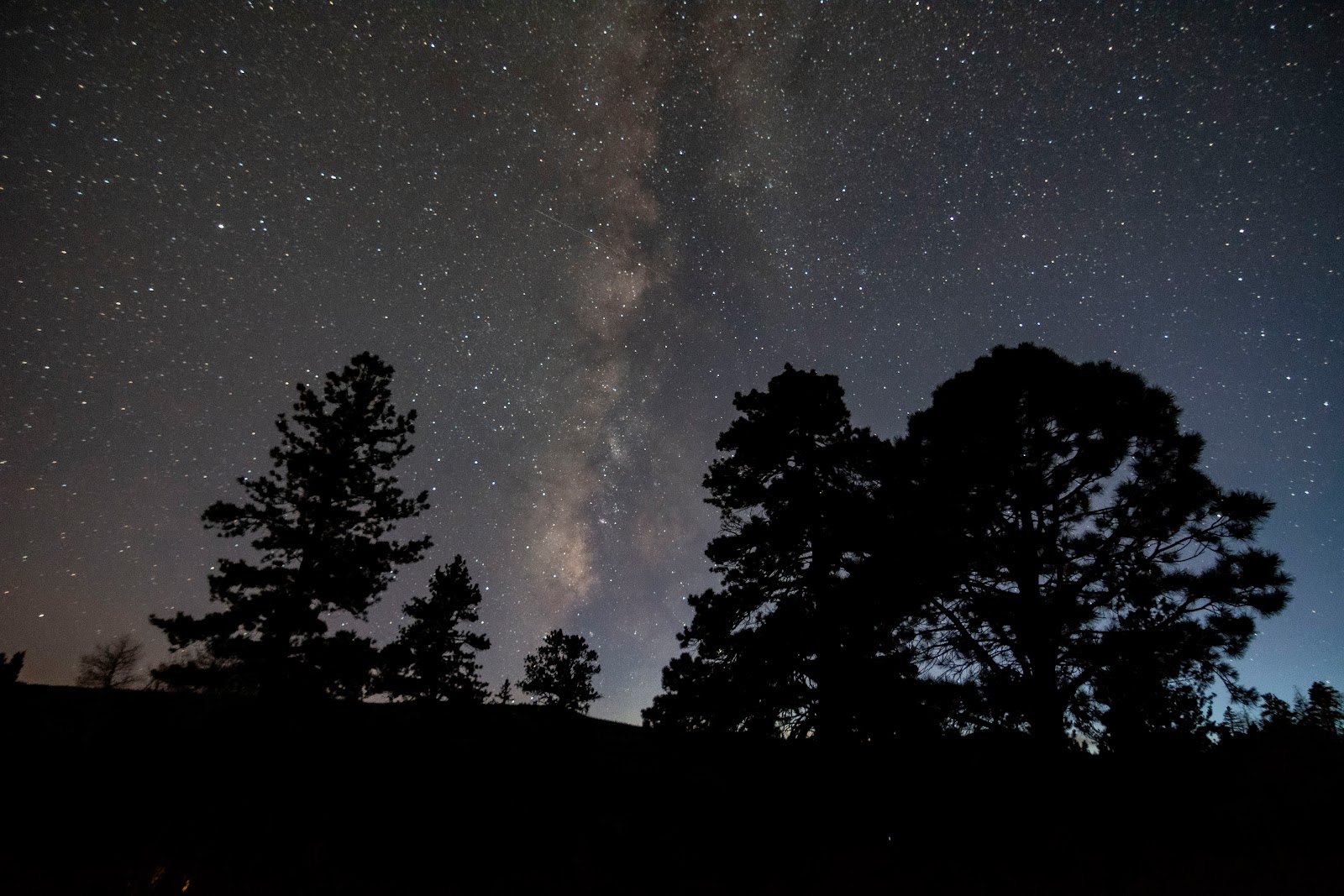
Andrew vs. the Cosmos image was taken by Jeff Greenland.The Milky Way and Trees image was taken by Andrew Greenland.
Orion, Taurus, and Pleiades image was taken by Andrew Greenland.




No comments:
Post a Comment