Sunday, November 1, 2026

Monthly Night Sky Report: November 2026

Introduction

    October ended with rainstorms and cooler weather, but overall it was a decent month for stargazing. I took out both of my telescopes one night to enjoy the wonders above. Both scopes performed beautifully after I collimated and aligned them. The nearly First Quarter Moon and Saturn were the clear highlights of the evening. Other notable objects were the Ring Nebula, Hercules Globular Cluster, Double Cluster in Perseus, the Owl Cluster, a few meteors, and the double star Albireo. Jupiter, Mars, and the Orion Nebula were also possible targets, but we decided to call it a night before they climbed high enough to see. If the weather cooperates, I may try to view these objects, and more, during the winter months.

    November will likely bring many more cloud-covered skies and snow to Utah, but observers should not let this discourage them from viewing the winter night sky on cloud-free nights. During November, I am looking forward to a planetary conjunction between Jupiter and Mars, Orion rising earlier, and the Leonid Meteor Shower.  


Mercury


   Mercury reaches inferior conjunction with the Sun on the 4th and will return to the morning sky shortly after. The best time to view this world will come around the 20th when it reaches its greatest western elongation. On this date, brilliant Venus can be found approximately 15° to the upper right with Spica nearby. Mercury will brighten in the morning sky as the month progresses, but if an observer can only set aside one morning to view this tiny world, I would choose the 20th, when it is farthest from the Sun. Venus can be used as a guide to find Mercury.    

  
Venus

   Venus recently transitioned from being the Evening Star to becoming the Morning Star. The first few days of November may make Venus difficult to locate in the morning sky, as it lies close to the Sun and will quickly be overwhelmed by the Sun's morning glow. By midmonth, however, Venus has pulled away from the Sun and will be much easier to spot. On the 7th, the Moon will join Venus in the early morning sky, creating a pleasing trio with Venus, the Moon, and Spica. If an observer can spare only one morning to view Venus, I would choose either the 7th, when the Moon and Spica are nearby, or the 20th, when Mercury is close by.
    
Mars
    
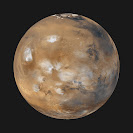
   Mars will rise above the Rocky Mountains around 1:30 in the morning for Utahns, near the start of November. By the end of the month, Mars will rise approximately two hours earlier at 11:30. The Earth's Moon will be close to Mars on the 2nd and again on the 30th. During the first half of November, Mars and Jupiter draw closer together. By the 14th, this pair of planets is just 1.5° apart. As we move through November, this pair pulls away from one another, leaving the bright star Regulus between them. Mars will not offer much planetary detail through a telescope since it's so far from Earth in its current position around the Sun. Jupiter should be a target for a telescope this month. If I were to view Mars only once during November, it would definitely be on or near the 15th, during the conjunction of Jupiter and Mars.   


Jupiter
Saturn


   Jupiter will be easy to spot as soon as it rises above the mountains. This happens around 2:00 AM at the beginning of the month and by midnight at the end of November. Jupiter, Mars, and Regulus will almost form a line in the early morning sky during the first few days of the month, but as Mars moves through the sky, this line will become skewed and become more of a triangle by the end of the month. The Earth's Moon will pass close by on the 3rd and again on the 30th this month. If I were to choose one day to look at Jupiter this month that wasn't around the midmonth conjunction with Mars, I would pick a date close to the 22nd to see the trio of Mars, Jupiter, and Regulus being close together.  

   Saturn reached opposition on October 4, making the Ringed World a popular target for observers of all types. This will continue through November as Saturn will be visible right after sunset. The best views of Saturn obviously come through a telescope, which can reveal its ring system. The Moon will pass close to Saturn on the 20th. If I were to pick only one night to view Saturn this month, it would be the first part of November, when the Moon is not close to Saturn, so I can easily see the ring system through a telescope.


Neptune
Uranus


  Uranus can be found nestled between Aldebaran and the Pleiades throughout November, making it easier to find with a pair of binoculars or a telescope. This world will reach opposition on the 25th, rising in the east as the Sun sets in the west, and then setting in the west as the Sun rises in the east. The Full Moon will pass close to Uranus on the 24th. If I were to view Uranus for only one night in November, I would pick the night of its opposition, the 25th, or the following night, the 26th, before the Moon rises. 

  Neptune will be the hardest planet to spot because of its great distance from Earth. A telescope or a pair of binoculars will be required to view this most distant world. Neptune will be approximately 7° west of Saturn throughout the month. The Earth's Moon will pass close by on the 20th. With Neptune and Saturn relatively close in the night sky, I would view Neptune during the same night that I was looking at Saturn through my telescope.


Leonid Meteor Shower

   The Leonid Meteor Shower will peak on the 17th this month in conjunction with the First Quarter Moon phase. On a moon-free peak date, observers can expect about 15 meteors per hour. Because of the Moon phase, an observer will be lucky to spot half that many on the 17th. This shouldn't deter serious observers, since these meteors are known to leave long, glowing trails. As the name suggests, the Leonid Meteors appear to radiate from Leo the Lion, the constellation where Jupiter can currently be found. Even though the Moon may be an issue, I would still watch this shower during its peak for the best chance to see the long, glowing trails of these meteors. 

Monthly Breakdown


November 01: Last Quarter Moon🌗 
November 02: Moon passes within 1° of Mars
November 02: Moon passes within 0.5° of Jupiter
November 04: Mercury in inferior conjunction
November 07: Moon passes within 1.5° of Venus 
November 09: New Moon 🌑
November 14: Mars and Jupiter Conjunction
November 17: First Quarter Moon 🌓
November 17: Leonid Meteor Shower peaks
November 20: Moon passes within 5° of Neptune
November 20: Moon passes within 7° of Saturn
November 20: Mercury reaches greatest western elongation 
November 24: Full Moon 🌕
November 24: Moon passes within 5° of Uranus 
November 25: Uranus reaches opposition 
November 30: Moon passes within 1.5° of Jupiter
November 30: Moon passes within 3° of Mars 


Now get outside and look up!
Planet images were taken by NASA.
Andrew vs. the Cosmos image was taken by Jeff Greenland.
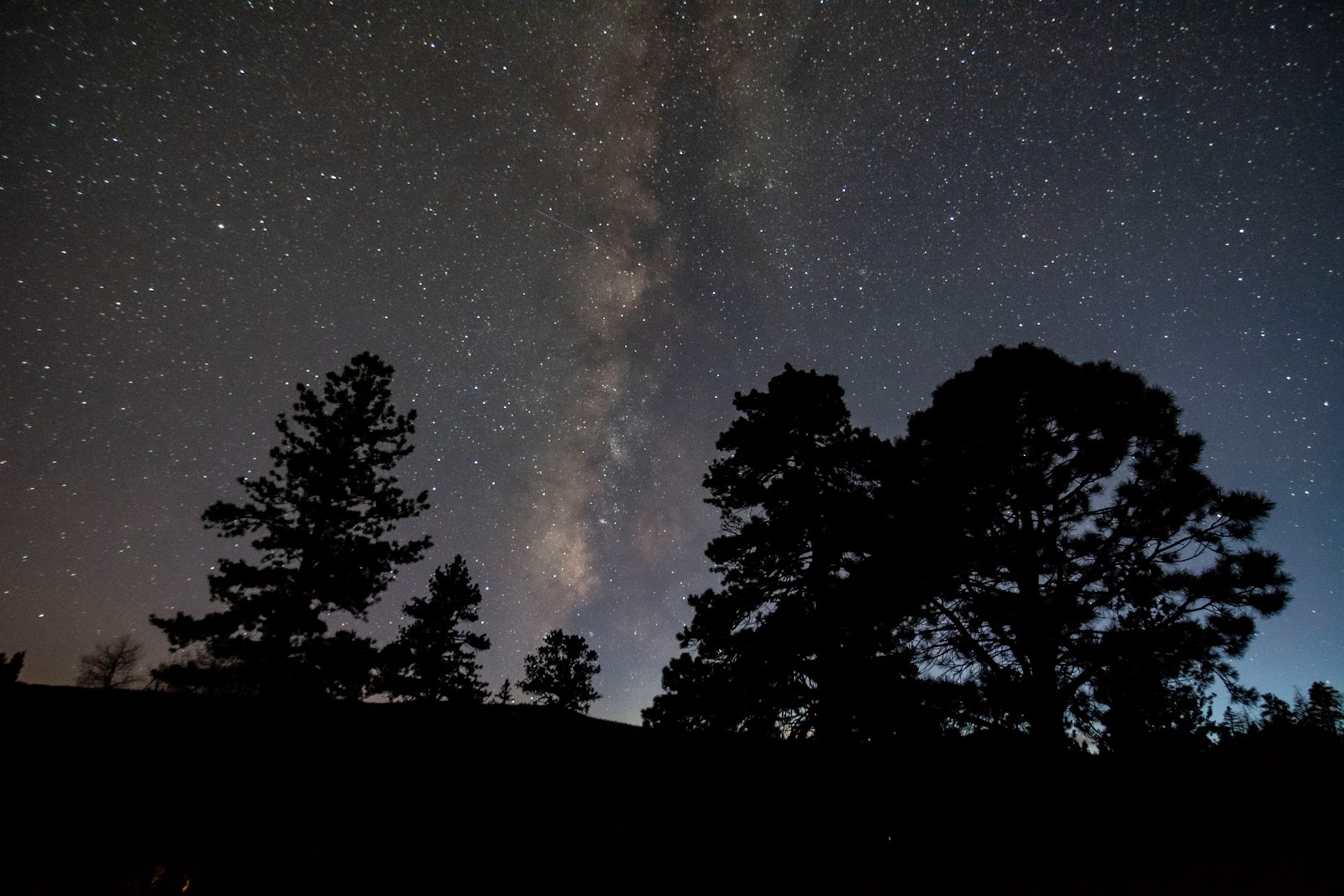
The Milky Way and Trees image was taken by Andrew Greenland.
Orion, Taurus, and Pleiades image was taken by Andrew Greenland.


Thursday, October 15, 2026

Midmonth Check-In: October 2026 and Perseverance Record Setting


  Introduction and Monthly Reminders   

    The first half of October has been great for stargazers and amateur astronomers. Wind, clouds, and rainstorms didn't roll in until the 10th, giving observers ample opportunity to view Saturn and many, if not all, of the other planets visible throughout the night. I watched Saturn reach opposition and Jupiter and Mars rise with Taurus and Orion in the morning, all with my unaided eye. 

    October will still offer the Orionid Meteor Shower, which peaks on the 21st, and several autumn and early winter DSOs high above the horizon for viewing pleasure. Of course, Saturn will still be a great target, as will Mars, Jupiter, Neptune, Uranus, and our closest neighbor, the Moon. I am planning one last outing with both of my visual scopes and perhaps my smart scope, before the freezing weather settles in. 


Perseverance

    NASA's Perseverance Rover launched from Cape Canaveral, Florida, on July 30, 2020. This mission aimed to search Mars for ancient microbial life, study its geology, and cache rock and regolith samples for a future return to Earth for further study. 

    The Perseverance Rover landed at Jezero Crater on Mars in February 2021, approximately 7 months after leaving Earth. During the "seven minutes of terror," NASA's Sky Crane helped lower the Perseverance Rover to the surface of Mars. In addition to its scientific survey of Mars, Perseverance carried a small helicopter, about the size of a drone, named Ingenuity. This mini helicopter completed 72 flights before being retired in 2024. 

    Perseverance also served as a prototype for a new autonomous navigation system, nicknamed AutoNav, to traverse the rocky Martian surface. This October, Perseverance set a new record, previously held by a different Mars rover, Opportunity, for the longest distance traveled on another world. The previous record was 28.06 miles (45.16 km), and Perseverance broke it at 28.08 miles (45.2 km). Obviously, this doesn't seem like a very long distance, with many of us commuting further than that each day for work or school. But remember that on Earth, we are typically driving on relatively smooth (except the potholes!) roads and can travel at high speeds. On Mars, there are no roads, and rocks often get in the way, so rovers such as Perseverance must navigate around obstacles to reach their destination.

    With an initial mission time of just one year, Perseverance is still going strong and has recently had its mission extended through 2028. With this additional time, Perseverance should be able to add more miles to its already record-breaking journey on another world.     


    Show that you support dark skies, like me, by being one of the first Utahns to get a Dark Sky license plate! Visit Dark Sky Utah to apply for a new license plate for your vehicle. 


Now get outside and look up!
   

Saturday, October 3, 2026

Monthly Night Sky Report: October 2026

                           Introduction

   September was much cooler than August, making nights out under the stars much more pleasant. Utahns did receive a few end-of-summer rainstorms, which I found quite enjoyable. I also enjoyed looking up before sunrise to see Jupiter and Orion high in the sky. I'm looking forward to more cool weather and, hopefully, clear skies to enjoy the autumn constellations and deep-sky objects.

    October is typically wetter than September, and snowstorms can occur during the month, especially around Halloween. This month should be great for stargazing, with Saturn reaching opposition and the Orionid Meteor Shower peaking. Mercury will return to the evening sky but may prove difficult to see. Neptune was recently at opposition and will remain a great target for telescopes and binoculars during October. Enjoy these spectacular sights and let the night sky inspire your curiosity.   


Mercury


   Mercury has transitioned to the evening sky and will be visible shortly after sunset. To spot this tiny world, try viewing during the first half of October when it's higher in the sky. Since Mercury is currently south of the ecliptic, a clear western horizon is essential, especially for Utahns with obstructed views. Use binoculars or a telescope if possible, and check local sunset times for optimal viewing windows.  

  
Venus

   Venus may also be tricky to spot during October. This world dips below the western horizon shortly after the Sun. Venus shines brightly, which may help in detecting this world low on the western horizon. Venus is quickly approaching the Sun for an inferior conjunction, which will occur on the 23rd. A clear view of the western horizon will be required to spot Venus this month.
    
Mars
    
   Rising around 2:30 AM for Utahns, Mars will be the easiest rocky world to spot during October. The Red Planet will rise about 30 minutes earlier by month's end due to its retrograde motion. This retrograde motion will have Mars moving closer to Jupiter in our night sky, with their closest approach occurring at the end of the month. The Earth's Moon will pass close by on the 5th. Unfortunately, unless an observer has a crystal-clear night with an extremely steady atmosphere, Mars will not offer any surface detail through a telescope.   


Jupiter
Saturn


   Jupiter is a great early morning target or for an observer who stays out all night. Its brilliance will make it easy to spot against the background stars of Leo. The Earth's Moon will pass close by on the 6th, occulting Jupiter for those in the Eastern United States. Several Galilean Moon transits will occur this month. I recommend using the Moons of Jupiter & Saturn app to find the transit times for a specific location. Watching these transits can be a fascinating experience, inviting you to explore the dynamic nature of our solar system.  

    Saturn reaches opposition on the 4th, making October the best time of the year to view this world. It will remain visible from sunset to sunrise during the month, giving observers ample opportunities to view Saturn. The Earth's Moon will pass close by on the 24th. Saturn's moons constantly change position around their parent planet, allowing transits to be seen from Earth. I recommend using the Moons of Jupiter & Saturn app to find when these transits will occur at your specific location.


Neptune
Uranus


   Uranus will remain between the Pleiades and Hyades star clusters of Taurus throughout October. We are only a month away from this world reaching opposition from our vantage point. You can see Uranus with the unaided eye from a dark-sky site on a moonless night, though it's easier to distinguish it from the background stars with a telescope or pair of binoculars. Earth's nearly Full Moon will pass close to Uranus on the 28th. 

  Neptune reached opposition in late September and will remain a great target throughout October. This world will be visible from sunset until sunrise in Pisces. Wait until close to midnight for this distant world to rise high in the sky. Neptune will require optical aid to view and will appear as a blue disk against the pinpoint background stars. If an observer can locate Saturn, Neptune is a little further southwest along the ecliptic since it rises above the horizon shortly before the Ringed World. The Earth's own Moon will pass close by on the 23rd.


Orionid Meteor Shower

   We've had a brief period with no major meteor showers; October will remedy that with the Orionid Meteor Shower! As the name suggests, these meteors will appear to radiate from the constellation of Orion. These meteors are active from October 2nd to November 7th, peaking on the 21st. During a Moon-free peak, observers could expect up to 20 meteors per hour, but this year a First Quarter Moon occurs three days before, meaning the Moon won't set until about 4:00 AM and will obscure all but the brightest meteors. This year, observers should plan to venture outside after 4:00 AM for a chance to see nearly the max rate of 18 meteors per hour. 

Monthly Breakdown


October 03: Last Quarter Moon🌗 
October 04: Saturn reaches opposition
October 05: Moon passes within 1° of Mars
October 06: Moon passes within 0.5° of Jupiter 
October 10: New Moon 🌑
October 11: Moon passes within 3° of Venus 
October 12: Mercury reaches greatest eastern elongation
October 12: Moon passes within 2° of Mercury 
October 18: First Quarter Moon 🌓 
October 21: Orionid Meteor Shower peaks
October 23: Moon passes within 5° of Neptune 
October 23: Venus reaches inferior conjunction
October 24: Moon passes within 7° of Saturn 
October 26: Full Moon 🌕 
October 28: Moon passes within 5° of Uranus 


Now get outside and look up!
Planet images were taken by NASA.
Andrew vs. the Cosmos image was taken by Jeff Greenland.
The Milky Way and Trees image was taken by Andrew Greenland.
Orion, Taurus, and Pleiades image was taken by Andrew Greenland.


Monday, September 14, 2026

Midmonth Check-In: September 2026 and Fish Lake


  Introduction and Monthly Reminders   

    The first half of September has been relatively clear and cool. I haven't had a chance to use any of my gear, but I hope to soon. I was, however, able to watch the Moon go from fully lit to completely dark. During its transition, I observed Jupiter rising in the early morning sky, and I'm looking forward to watching it rise earlier with each passing day. Orion is also returning to the morning sky, which is one of my favorite times of the year since it signals cooler temperatures for the Northern Hemisphere observers. 

    The remainder of the month will give observers the chance to see the Moon pass close to Saturn, Uranus, and Neptune. The Autumnal Equinox will occur on the 22nd, giving the Northern Hemisphere an equal amount (12 hours) of daylight and night. This also marks the time when days get shorter, nights get longer, and the weather gets colder. Many observers start bundling up while stargazing! Neptune will reach opposition on the 25th, and the Full Moon will be visible on the 26th. 


Fish Lake Adventure

    As mentioned earlier, I traveled to Fish Lake, Utah, near the peak of the Perseids on August 12. I took my new scope, a 100mm refractor, and my DSLR camera. I wasn't expecting much, since the forecast predicted rain and clouds for my entire stay. I actually debated bringing any of my gear because of that forecast. Thankfully, it wasn't 100% accurate, and some stargazing was possible.

    We left on the 12th, with the entire day and night plagued by rain and clouds. Perhaps "plagued" is the wrong word, since I really do enjoy the rain, clouds, and cooler temperatures that accompany this type of weather. Of course, the astronomer in me does not like this weather at all and often gets frustrated planning trips like this one when the weather does not cooperate. 

    Friday started mostly clear, but clouds quickly rolled in and blocked out the sky for most of the day. We went on a nice hike during this time while the temperatures were cool, likely in the low 60s, and then returned to camp to read and play games for a while. I wasn't expecting much in the way of stargazing due to the clouds. However, after having dinner and playing some card games, which I won, of course, I stepped outside to see what I could see. I was shocked to see that there were only a few wispy clouds in the sky! We quickly loaded my DSLR camera and phone tripod and headed to the northern end of Fish Lake. I took a few decent pictures, but we were disappointed by how few meteors we saw. We each only saw one. We only stayed out until approximately 10:30 because it was cold. The temperatures dropped into the 30s that night, and we weren't prepared for temperatures like that. At least the few pictures I took turned out! 

Andromeda and aircraft taken with DSLR

Meteor and Milky Way taken with DSLR

Milky Way Pilot taken with DSLR

Milky Way, Meteor, and Fish Lake taken with smartphone

Aircraft and the night sky taken with smartphone

Aircraft, Andromeda, and the Milky Way taken with smartphone

    Saturday started out very much the same as Friday. However, the clouds stayed away for most of the day and didn't start rolling in until late afternoon. During the day, we went on a different hike and sat by the lake for a few hours before returning to our cabin to really relax and soak up the mountain air. We were really hoping for a clear night for our last night there, but the patchy clouds didn't seem ready to leave. We loaded up the telescope and camera anyway and drove to the north end of Fish Lake again to see if the astronomy gods would grant us another clear night. To my amazement and delight, the clouds mostly hugged the eastern horizon, and I felt confident rain would stay away, so I set up my new scope. I futzed around with the scope for a few hours trying to get a good star alignment but was unsuccessful. We did still manage to view the Andromeda Galaxy and a couple of double stars, but nothing more. I also set up my DSLR to take a timelapse of the sky to try to catch some meteors, and everything was going great until some people came to the same location with their headlights, ruining part of the images. Below are the best images from the attempted timelapse and from my phone. 

Andromeda with Perseid Meteor and some strangers taken with DSLR

Bright Milky Way taken with smartphone

Milky Way in Fish Lake taken with smartphone

    All in all, it was a fantastic end-of-summer trip. Even though the tracking was off and I grew frustrated, I was still impressed by the views of the stars through my new scope. The views through my big Dobsonian are better since it's about three times as large; I feel the new scope is a great addition to my mini fleet of astronomy gear. Once I work out the bugs, I should be able to set up my new scope more quickly. While my Dobsonian breaks down into smaller units for easier transport than a typical Dobsonian, it's still large, takes up a lot of space in a car, and takes time to assemble and collimate. My new scope is much smaller, takes up less space, and assembles more quickly. I look forward to my next outing with either one, or even both, of these scopes.   


    Show that you support dark skies, like me, by being one of the first Utahns to get a Dark Sky license plate! Visit Dark Sky Utah to apply for a new license plate for your vehicle. 


Now get outside and look up!
   

Monday, August 31, 2026

Monthly Night Sky Report: September 2026

                          Introduction

   August was still warm, with a few cooler, rainy days mixed in. Utahns experienced some evening thunderstorms, reminiscent of the summer storms I remember as a kid. I saw a few Perseid meteors and took one of my scopes out to view the stars. I also saw part of the Partial Lunar Eclipse before the clouds rolled in. 

    September should offer some great nights of stargazing. Cooler temperatures bring a steadier atmosphere and let observers use high-powered eyepieces to better reveal the details of the Moon, planets, and deep-sky objects. This month will be a less exciting month for stargazers, with no major meteor showers and no eclipses. Neptune will reach opposition during September, making it the best time of the year to view the most distant planet in our solar system.   


Mercury


   Mercury will be a difficult target for Northern Hemisphere observers in September. The ecliptic brings Mercury close to the horizon, so a high, clear view of the western sky will be needed shortly after sunset. The best chance to see this tiny world will come on the 12th when the Moon is just 11° away. Venus will also be nearby. 

  
Venus

   Venus will be easy to spot after sunset, even before the glow of the Sun retreats from the evening sky. This world will sink below the western horizon earlier with each passing day, but it will remain prominent in the sky. Venus will reach its greatest illumination on the 18th, shining brightly at -4.8 magnitude. Observers with binoculars or a telescope can see the planet's different phases, with about 25% of its disk illuminated on the 21st.
    
Mars
    
   Mars can be found rising with the stars of Gemini in early September, around 2:30 AM. By the end of the month, the Red Planet will have crossed into Cancer, the Crab, and rise approximately an hour earlier. This outer rocky world will not offer much detail through a telescope because of its distance from Earth, but better views will present themselves in early 2027.


Jupiter
Saturn


   Jupiter will begin the month among the stars of Cancer. This giant planet rises above the eastern horizon around 4:30 AM as the month begins. Close to the time that Mars is crossing into Cancer, Jupiter will leave this region of the night sky and move to the stars of Leo. At the end of the month, Jupiter can be found just 11° from Regulus, the brightest star in Leo. The early morning hours are a great time to view this planet. A telescope will easily reveal Jupiter's four large Galilean Moons and the cloud bands in its atmosphere. Colored filters can help reveal Jupiter's band structure. Several moon transits are visible during September. I recommend using the Moons of Jupiter & Saturn app to find the transit times for a specific location.  

    It is nearly peak Saturn observation time as it approaches opposition in October. For the time being, the Ringed World can be found rising above the eastern horizon around 10:30 PM at the start of the month and by approximately 8:30 PM by month's end. A telescope will reveal Saturn's ring structure and its largest moons. You can observe several moon transits this month. I recommend using the Moons of Jupiter & Saturn app to find when these transits will occur at your location.


Neptune
Uranus


   Uranus can be found hiding among the stars of Taurus. This distant world is about halfway between the Pleiades and the Hyades star clusters throughout September. While technically visible to the unaided eye from a dark, Moon-free sky, binoculars or a telescope will help you distinguish it from the background stars. 

   Neptune reaches opposition on the 25th, making this date one of the best times of the year to view this most distant world. Neptune can be found rising with Saturn and the stars of Pisces. You will need binoculars or a telescope to see this world.


Deep Sky Objects

   This September, there aren't many exciting astronomy targets to view. However, plenty of DSOs are visible with a telescope. Observers may also catch up to seven meteors per hour during any night of the month, although the best time to view will come during the New Moon phase. I recommend bringing a comfortable chair and warm clothing to a dark-sky site, relaxing, and looking up at the wonders of our night sky.   

Monthly Breakdown


September 03: Moon passes within 5° of Uranus
September 04: Last Quarter Moon🌗 
September 06: Moon passes within 3° of Mars
September 08: Moon passes within 1° of Jupiter
September 10: New Moon 🌑
September 14: Moon passes within 1° of Venus 
September 18: First Quarter Moon 🌓 
September 22: Autumnal Equinox
September 25: Neptune reaches opposition 
September 26: Full Moon 🌕 
September 26: Moon passes within 5° of Neptune
September 27: Moon passes within 7° of Saturn 
September 30: Moon passes within 5° of Uranus 


Now get outside and look up!
Planet images were taken by NASA.
Andrew vs. the Cosmos image was taken by Jeff Greenland.
The Milky Way and Trees image was taken by Andrew Greenland.
Orion, Taurus, and Pleiades image was taken by Andrew Greenland.