Introduction
The last two weeks of February in Utah received some rain, snow, and colder temperatures, making stargazing difficult or impossible. Even with the cloud cover on most nights and mornings, I was still able to spot Jupiter, several of the winter constellations, and the Moon moving across the night sky.
March should prove to be a great month for stargazers, weather permitting, of course. The most notable events include a Total Lunar Eclipse, running the Messier Marathon, and the chance to see the Zodiacal Light. The Vernal (Spring) Equinox occurs this month as well. Saturn and Neptune will reach conjunction with the Sun and will be lost from view during most, if not all, of March.
Due to a few setbacks, the Artemis II mission has been delayed and is not expected to launch before April. The Space Launch System (SLS) has been rolled back to the Vehicle Assembly Building to address a few remaining issues, with a helium leak as the primary culprit. Stay up-to-date with the Artemis Mission here or with your favorite news source.
 |
| Mercury |
The innermost planet, Mercury, will hide from us Earthlings for most of March as it reaches inferior conjunction with the Sun on the 7th. The Moon will pass close by Mercury on the 17th, but this world will still be too close to the horizon to spot. But by the end of the month, Mercury will rise earlier and climb high enough to escape the morning glow of the Sun to be seen above the eastern horizon.
 |
| Venus |
Venus will remain in the western sky after sunset during March. It will easily outshine all other objects in its region of sky except for the elusive thin Crescent Moon on the 19th and 20th. The Moon will be closer to Venus and 5% lit on the 20th. On the 7th and 8th, a dim Saturn can be found close to Venus. A pair of binoculars will help observers spot the Ringed World.
 |
| Mars |
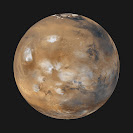
Mars can be found near Mercury but is still too close to the Sun in March, hiding its red glow from Earth.
 |
| Jupiter |
Saturn will be difficult to spot during the month as it approaches the Sun. The best time to view the Ringed World is early in the month, with the 7th and 8th likely the best opportunities, as this planet lies close to Venus. A pair of binoculars will help reveal Saturn's faint glow. Saturn will reach conjunction with the Sun on the 25th.
 |
| Neptune |
 |
| Uranus |
Uranus will continue to float near the Pleiades during March. Glowing dimly at approximately 5.7 magnitude, this ice giant is technically within range of being seen by the unaided human eye. A dark sky location and good visibility will be required to tackle this feat. My eyes aren't quite good enough anymore to see this planet without the aid of binoculars or a telescope. Through a telescope, Uranus will have a noticeable blue-green tint and will appear as a disk in the field of view instead of the pinpoint of a star, making it easy to tell if this planet is in the field of view. The Earth's Moon will pass close by on the 23rd.
Neptune, the outermost planet, will be difficult to spot during March. It can be found close to Saturn in the evening twilight after sunset. Neptune will require a clear view of the western horizon and a pair of binoculars or a telescope to see. It reaches solar conjunction on the 22nd but will return to our morning sky in the future.
Eclipse, Zodiacal Light, and Messier Marathon
Comet Wierzchos is still visible in the early evening sky during March with optical aid. It can be found wandering through Cetus and Eridanus during the first two weeks of March as it approaches Taurus, and more specifically, Aldebaran, the red eye of the Bull. Comet Wierzchos will rapidly dim as it moves away from the Earth and returns to the outer solar system.
The Zodiacal Light will continue to be a sight to see during March. This month is a particularly great time to spot this ethereal glow as the Vernal (Spring) Equinox occurs. Anytime after the 8th will be great, as the Moon's glow won't affect the western horizon as much. Of course, the evenings surrounding the New Moon phase (March 18th) will be the ideal time to view the Zodiacal Light. No special equipment is required; however, a long exposure image will gather more light than the human eye can. Just point the camera to the west after the sky darkens! A wide-angle shot is usually preferable.
Utahns will be treated to a Total Lunar Eclipse in the early morning hours of March 3rd. This event will likely be the highlight for most observers this month. The eclipse will begin at 1:45 AM on the 3rd and will continue until the Moon sinks below the western horizon at approximately 7:00 AM. Totality will occur at 4:34 AM, so observers interested in only seeing the Blood Moon should set their alarms for this time! Weather permitting, I plan on setting up my smart telescope to capture the entire event. I have checked the weather several times, with some forecasts showing clear skies while others are predicting clouds and rain. At the very least, I would love to get an image of the Moon during totality.
March is the best time of the year for a Messier Marathon. The first weekend in March is the best time for Utahns, as most of the Messier Catalog will be above the horizon throughout the night. The only object that would be missed is M30, a globular cluster. Unfortunately, these dates coincide with the Full Moon Phase, further limiting the number of Messier objects that can be observed. During a good year when the dates coincide with a New Moon phase, observers typically spend only a short amount of time viewing the individual 110 objects of the Messier Catalog in order to fit them all in. By spreading this out throughout the year, an observer can spend considerably more time viewing each object. In recent years, with the advent of smart telescopes, observers have been attempting to image each object in a single night.
Monthly Breakdown
March 03: Full Moon 🌕March 03: Total Lunar Eclipse; Totality @ 4:34 AM
March 07: Mercury reaches inferior conjunction
March 11: Last Quarter Moon🌗
March 17: Moon passes within 2° of Mercury
March 17: Moon passes within 2° of Mars
March 18: New Moon 🌑
March 20: Moon passes within 5° of Venus
March 20: Vernal (Spring) Equinox occurs
March 22: Neptune reaches solar conjunction
March 23: Moon passes within 5° of Uranus
March 25: Saturn reaches solar conjunction
March 25: First Quarter Moon 🌓
March 26: Moon passes within 4° of Jupiter
 |
| Now get outside and look up! |
Planet images were taken by NASA.
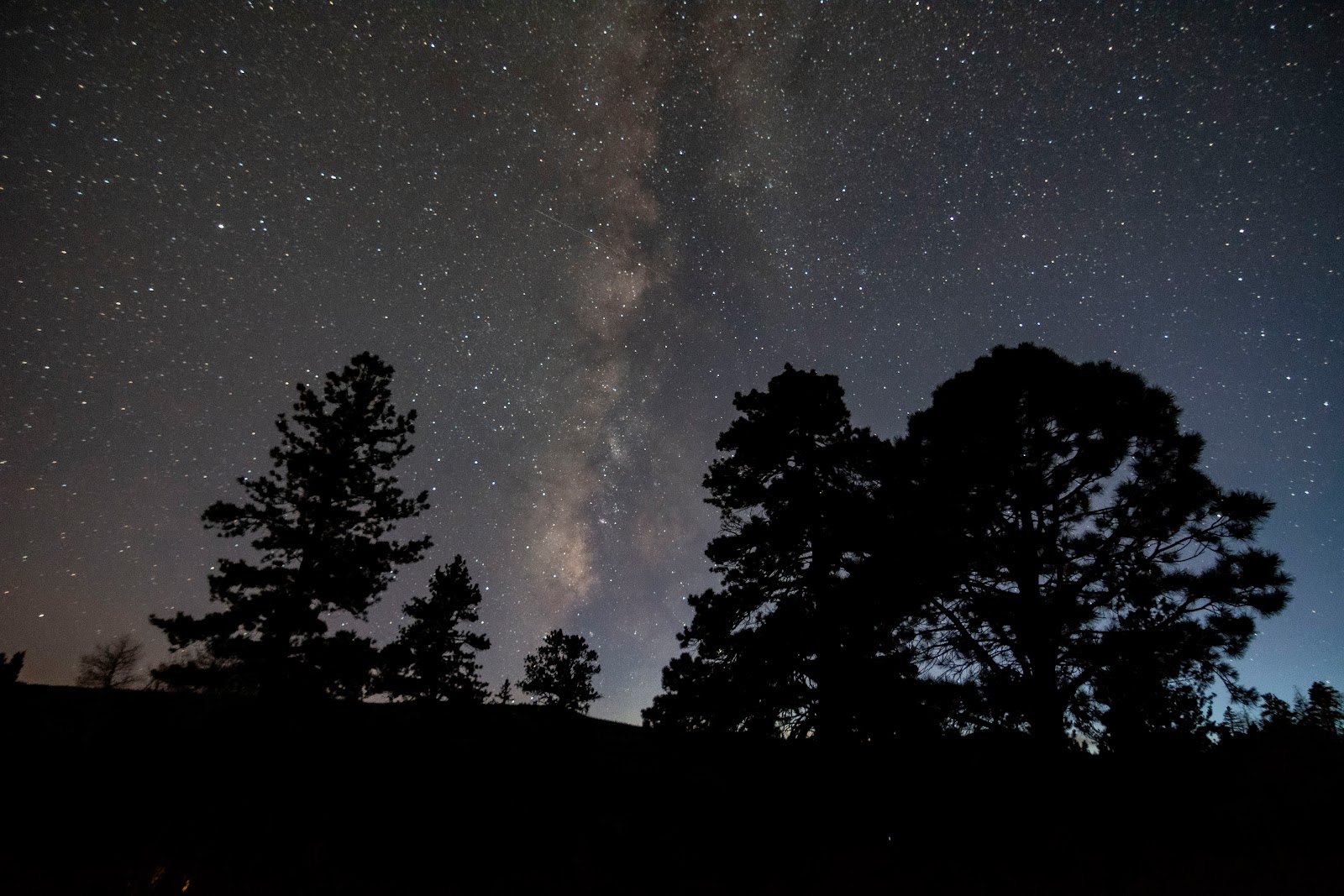
Andrew vs. the Cosmos image was taken by Jeff Greenland.The Milky Way and Trees image was taken by Andrew Greenland.
Orion, Taurus, and Pleiades image was taken by Andrew Greenland.




No comments:
Post a Comment