Introduction
The temperatures in March set records not only in Utah but also in several other states. The warmer temperatures are nice for outdoor activities, but not so good for Utah's water situation. I suppose on the upside, we have been experiencing clearer skies for stargazing! I have been enjoying looking at Jupiter and Venus in the evening sky, along with the familiar winter constellations, as they set earlier each night. I am planning on a quick outing with my new scope during the final few days of March. Of course, there is currently cloudy weather on the horizon, but hopefully it will be clear enough to enjoy a few hours under the stars.
Historically, April brings rain showers and wet weather, but with the current trend, who knows what we will get?! This month brings the return of a meteor shower to our skies after a two-month break. Most of the planets will theoretically be visible this month, with a few being harder to spot due to their proximity to the Sun. There may also be a few comets visible during April, with one possibly becoming visible to the unaided eye.
Artemis II is currently expected to launch on April 1st, sending four astronauts around the Moon. Stay up-to-date with the Artemis Mission here or with your favorite news source.
 |
| Mercury |
Mercury can be found above the eastern horizon before sunrise during April. This tiny world will reach its greatest western elongation on the 3rd, perhaps making this the best time to view as it rises about 45 minutes before the Sun. Mercury doesn't offer any planetary detail, and the only benefit of viewing this tiny world through a telescope or binoculars is to help more easily identify it in the glow of the rising Sun. On the 15th, a thin crescent Moon will join Mercury in the sky. On the 20th, Saturn and Mars may also be seen just before sunrise. Perhaps we could call this time of morning the "House of the Rising Sun?" On the 20th, these three planets will all lie within 2° of one another. A pair of binoculars or a telescope with a low-power eyepiece may be required to see the faint pinpoint light of Saturn and Mars. Mercury should stand out, shining at magnitude -0.2 this morning, so target this world while trying to spot Saturn and Mars in the sunrise glow.
 |
| Venus |
Switching to the evening sky and the western horizon, Venus can be found proudly shining before the Sun's glow fades into darkness. Venus will begin April, hanging amongst the stars of Aries, the Ram. As the month progresses, Venus will slide over to the neighboring constellation of Taurus. The famous Pleiades can be found just a few degrees above this bright planet on the 18th. Uranus has been found close to the Pleiades over the past few months and will join Venus in the night sky on the 23rd when the pair will be less than 1° apart. By the 25th, Venus will have moved to the left of the Pleiades in the evening sky. This month will likely be the last time to view the Pleiades until the winter constellations reemerge later this year.
 |
| Mars |
Mars can be found in the "House of the Rising Sun" region of the sky near Mercury during April. On the 20th, Mercury and Saturn can be found within 2° of the Red Planet; a pair of binoculars or a telescope may be required to pick out the dim Martian glow from the brightening morning sky. Mars will continue to rise earlier each day, but won't be easy to spot until later this year.
 |
| Jupiter |
 |
| Saturn |
Saturn can be found in the "House of the Rising Sun" in April, alongside Mercury and Mars. The trio of planets can be found within 2° of each other on the 20th, creating quite the planetary conjunction. A pair of binoculars or a telescope with a low-power eyepiece will be required to view the dim planets against the brightening background sky.
 |
| Neptune |
 |
| Uranus |
Uranus will continue to be found close to the Pleiades during April, but will soon be lost from view as it nears solar conjunction. For the time being, Uranus will be above the western horizon and above brilliant Venus during the first half of the month. While Uranus moves closer to the horizon, Venus will climb higher until the pair of planets meet on the 24th, at which point they will be less than 1° apart.
Neptune recently reached solar conjunction and will be lost from view during April. It will return to our morning sky soon!
Lyrid Meteor Shower and Comets
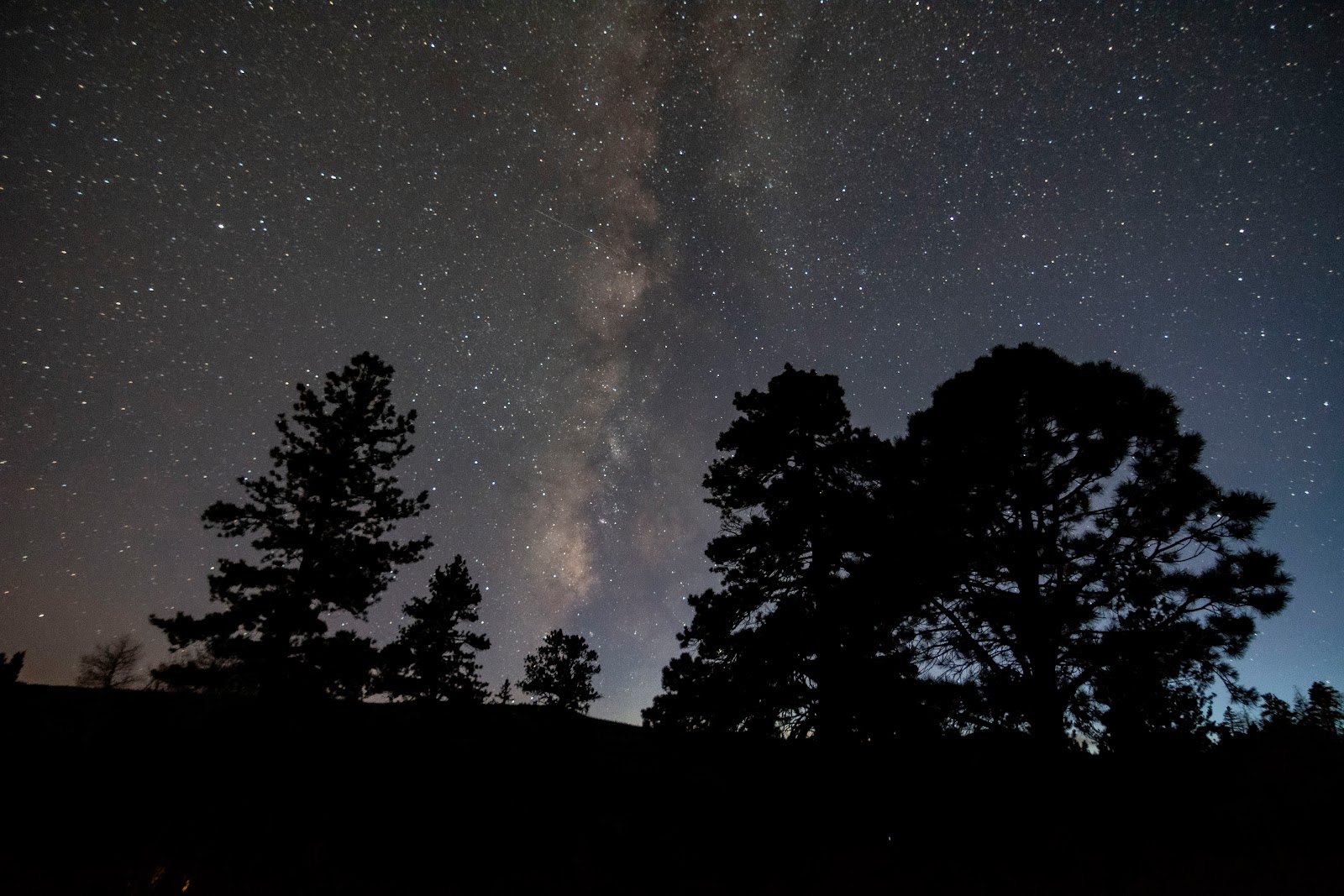
The Lyrid Meteor Shower returns this month, ending a two-month major meteor shower drought! The Lyrids are active from April 14th until the 30th, with the peak occurring in the predawn sky on the 22nd. The almost first-quarter Moon will sink below the horizon around 1:00 AM on this date, making this the best time to search for these shooting stars. The Lyrids will appear to radiate from the constellation Lyra, which rises in the early evening sky and will reach the zenith shortly before the Moon sets. The maximum rate on the 22nd is approximately 20 meteors per hour. This isn't one of the more active showers, but a dark sky site after Moonset will increase the chance of spotting the Lyrids.
The most exciting and unpredictable of the comets visible this month is the newly discovered Comet C/2026 A1 (MAPS). It's also being called the "Easter Comet" as it will pass close to the Sun on April 4th. This means the comet will either break apart or the heat from the Sun could trigger an outburst, potentially making Comet MAPS visible to the unaided eye...during daylight hours! If it does survive, it will be visible in the western sky after sunset. The Southern Hemisphere will have the best views, but Northern Hemisphere observers should still be able to at least see its tail.
Comet 10P/Tempel, aka Tempel 2, is returning to our skies and should be visible throughout much of the summer. Observers should begin to look for Tempel 2 from a dark sky location on the 12th near the constellation Scutum. This region of the sky rises above the eastern horizon near 2:00 AM. A telescope or a long-exposure image will be needed in April to spot Tempel 2, but it is expected to double its brightness by August.
The final known comet to watch during April is Comet C/2025 R3 (PanSTARRS). It is currently visible in the constellation Pegasus, which rises above the eastern horizon shortly before sunrise. The best time to view this comet will come around midmonth, about an hour or so before sunrise, still hovering among the stars of Pegasus. A pair of binoculars, a telescope, or an imaging setup will be required to view this comet during its brief visit.
 |
Monthly Breakdown
April 01: Full Moon 🌕
April 03: Mercury reaches greatest western elongation
April 10: Last Quarter Moon🌗
April 15: Moon passes within 5° of MercuryApril 15: Moon passes within 4° of MarsApril 17: New Moon 🌑April 16: Moon passes within 5° of Saturn
April 19: Moon passes within 5° of Venus
April 19: Moon passes within 5° of Uranus
April 19: Mercury and Mars pass within 2°April 20: Mercury and Saturn pass within 1°April 20: Mars and Saturn pass within 1°April 22: Lyrid Meteor Shower peaksApril 22: Moon passes within 4° of Jupiter
April 23: First Quarter Moon 🌓April 24: Venus and Uranus pass within 1°
 |
| Now get outside and look up! |
Planet images were taken by NASA.
Andrew vs. the Cosmos image was taken by Jeff Greenland.The Milky Way and Trees image was taken by Andrew Greenland.
Orion, Taurus, and Pleiades image was taken by Andrew Greenland.

